If you have been dreaming about a little more land, a few animals, a barn, or room to grow crops, buying a small farm or ranch near Dixon can feel exciting and overwhelming at the same time. This is not the same as buying a typical house in town, and the details that matter most are often underground, on a zoning map, or buried in permit records. If you want to make a smart move, this guide will help you focus on the issues that matter most before you write an offer. Let’s dive in.
Why Dixon draws farm and ranch buyers
Dixon sits in a county where agriculture is not a side note. Solano County says agriculture takes place on 67% of the county’s land and generates nearly $1.66 billion in gross output value each year. The county also reports thousands of direct and related jobs tied to farming, ranching, processing, and distribution.
That matters because when you buy near Dixon, you are stepping into an active agricultural area. Common county commodities include almonds, nursery stock, cattle and calves, processing tomatoes, alfalfa hay, feeder lambs, wine grapes, milk, walnuts, dairy cows, and irrigated wheat. In other words, surrounding land uses may be productive and busy, not purely scenic.
Understand the local farming backdrop
Before you fall in love with a property, it helps to understand what daily life near working land can involve. California’s Right to Farm Act protects many agricultural activities from nuisance claims, including cultivation, dairying, viticulture, apiculture, horticulture, and livestock raising. That legal backdrop can affect your expectations around noise, odors, dust, equipment traffic, and nearby agricultural operations.
If you are moving from a more residential setting, this is one of the biggest mindset shifts. A charming country property may also come with early equipment movement, seasonal field activity, and neighboring operations that are part of normal local life. Knowing that upfront can help you choose a property that truly fits your goals.
Verify city or county jurisdiction first
One of the first questions to answer is simple but critical: is the parcel inside Dixon city limits or in unincorporated Solano County? You should not assume a property described as a farm or ranch is governed the same way as nearby acreage. The applicable rules can change based on jurisdiction.
For unincorporated parcels, Solano County instructs users to verify zoning through its Tax Parcel Viewer and the unincorporated zoning layer. The county also uses its GIS Parcel Viewer to verify Williamson Act status. Within Dixon, the adopted zoning code includes residential, commercial and mixed-use, industrial, public or semi-public, and overlay districts.
Start with water access
Water is often the first major diligence item for a small farm or ranch purchase near Dixon. If a parcel is in Solano Irrigation District territory, that can shape what is possible on the property. SID says it has entitlements for 141,000 acre feet of agricultural and domestic water each year and operates the Solano Project.
SID also says gravity agricultural irrigation water is typically available only during the board-approved irrigation season, usually March 1 through October 15. That timing can affect crop planning, pasture management, and overall operating costs. If a listing mentions irrigation, it is worth confirming exactly what type of service exists and when water is available.
Look closely at wells and water quality
If the property relies on groundwater, your due diligence should go deeper than asking whether there is a well. Solano Subbasin information notes that the basin was ranked medium priority due in part to irrigated lands, well density, and expected population growth that depends on groundwater. In Solano County, a permit is required to construct, repair, or destroy a water supply well or soil boring.
For private domestic wells, the owner is responsible for water safety. The State Water Resources Control Board recommends testing and protecting the well from contaminants. In Dixon and surrounding unincorporated areas, Solano County Environmental Health handles permits, inspections, complaint investigations, and enforcement for wells, septic systems, and related environmental health matters.
Check soils, drainage, and land usability
A small acreage listing can look perfect in photos and still be a poor fit for your plans. Soil conditions, drainage, permeability, and erosion risk all affect what the land can realistically support. That includes row crops, pasture, paddocks, animal areas, and even where future improvements may work best.
The USDA NRCS Web Soil Survey is the official free source for soil map and description data, and NRCS says the survey can be used for general farm and local planning. For buyers, that makes it a practical screening tool. It can help you ask better questions before you commit to a parcel that may need more work than expected.
Review zoning before you assume uses
A small farm or ranch purchase is really a land-use purchase as much as a home purchase. If you want horses, livestock, crop production, produce sales, workshops, or future outbuildings, you need to confirm those uses at the parcel level. General descriptions in marketing remarks are not enough.
This is especially important if you are buying with a business or income idea in mind. Your intended use may depend on zoning, permits, service access, and whether the existing improvements were approved for that purpose. A clear review early in the process can save you time, money, and frustration later.
Understand Williamson Act status
For Dixon-area acreage, Williamson Act status can be a major factor. Solano County says it is not accepting new Agricultural Preserve or Williamson Act applications, but existing contracts may still allow boundary changes or replacement contracts. The county also says its uniform rules can be more restrictive than zoning.
Those added restrictions can affect minimum parcel size, permitted and compatible uses, incidental residential development, and lot-line adjustments. That means a property under contract may come with rules beyond what a standard zoning review shows. If a parcel has Williamson Act status, you should ask exactly how it affects your intended use.
Check barns, sheds, and other improvements
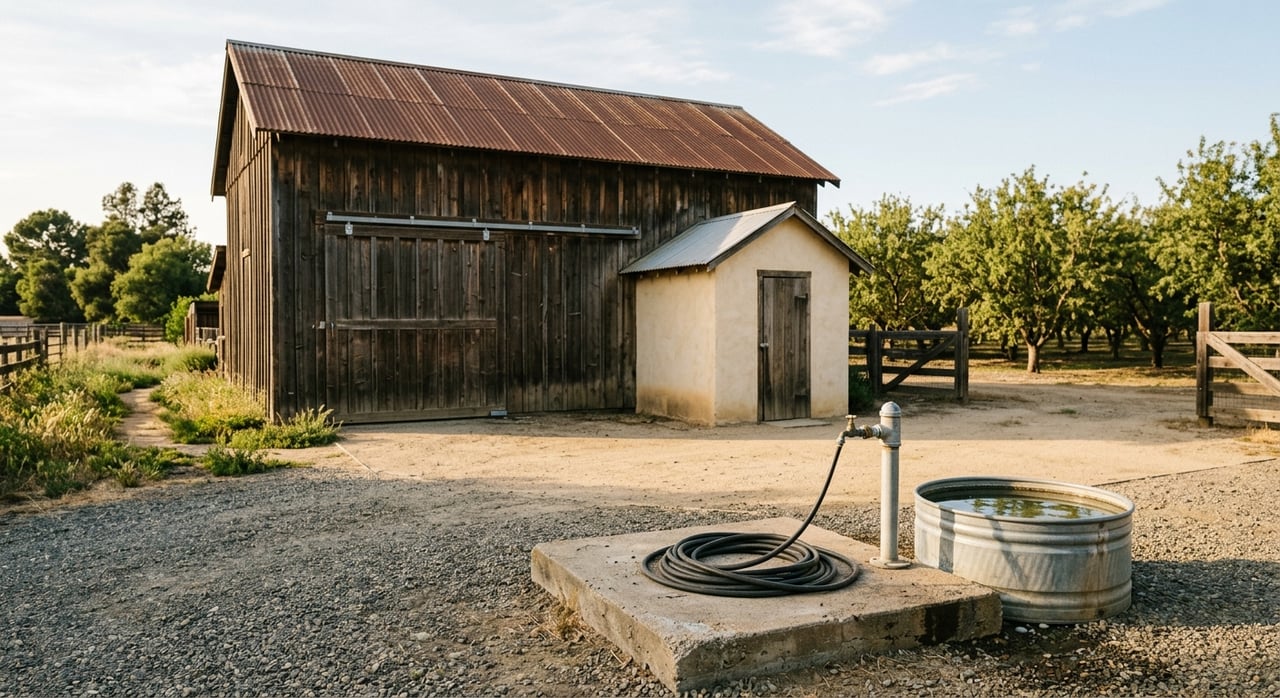
Outbuildings often add a lot of appeal to rural properties, but they also deserve careful review. Solano County says building permit applications are routed to Planning for review, and buyers should verify setbacks, easements, and required yard areas before finalizing plans. Permits are also required for construction, enlargement, alteration, demolition, or changes in occupancy.
Plan submittals are expected to show property lines, easements, setbacks, roads, drainage, existing and proposed structures, wells, septic systems, LP tanks, streams, and other site features. That means a barn, workshop, shed, driveway, or utility hookup should not be taken at face value. You want to know what was built, whether it was permitted, and whether its current use matches the record.
Be cautious with change-of-use ideas
A common mistake is assuming a structure can easily serve a new purpose. A barn-to-event-space concept, shop expansion, or accessory building conversion may trigger both land-use and building-code review. Even a seemingly simple improvement can become more complex once permits and site constraints enter the picture.
If the parcel is inside Dixon city limits, there may be separate standards for smaller-scale agricultural uses. For example, Dixon’s adopted zoning code limits agricultural produce stands to certain districts, caps them at 120 square feet unless a larger size is approved, and limits sales to produce and value-added products grown and produced within Dixon or Solano County.
Treat income potential like a business plan
Many buyers are drawn to small farms and ranches because they want a lifestyle property with some earning potential. That can be a smart goal, but it should be tested carefully. USDA guidance says a good farm business plan is a roadmap for start-up, profitability, and growth, with attention to goals, management, marketing, operations, finance, labor, conservation, and risk.
In practical terms, that means asking a better question than, “Could I make this work?” Instead ask, “Can this parcel support my intended use at a realistic water, zoning, labor, and financing cost?” The right property for a hobby setup may not be the right property for a revenue-producing operation.
Know the local sales and permit channels
If direct-to-consumer sales are part of your plan, local rules matter. In Solano County, the agricultural commissioner issues farmers market permits and certified producer certificates. County staff also inspect farmers markets, produce stands, retail outlets, wholesale distribution centers, and packing houses for labeling and quality.
The county further states that qualifying agricultural or viticultural businesses producing commodities on the premises within the county are exempt from the county business license requirement unless they are selling products not grown or produced on those premises. Planning staff still review zoning consistency before a business license is accepted. That makes it important to connect your business idea to the actual parcel rules.
A smart pre-offer checklist
Before you write an offer on a small farm or ranch near Dixon, make sure you can answer these questions:
- Is the parcel inside Dixon city limits or in unincorporated Solano County?
- What is the verified zoning, and does it support your intended use?
- Is the property under a Williamson Act contract?
- What is the water source: SID, a private well, another district, or a combination?
- If irrigation water is available, what are the service terms and seasonal limits?
- If there is a well, what is the permit history and water-testing plan?
- How do the soils and drainage affect your plans for crops, animals, or improvements?
- Were barns, sheds, workshops, driveways, and utility hookups properly permitted?
- Will your use be hobby-based, livestock-focused, a market garden, or a revenue operation?
- What operating budget, labor plan, and financing strategy make sense before closing?
Why experienced guidance matters
Small farm and ranch purchases can involve more moving parts than a typical residential transaction. Water access, zoning layers, permit history, site improvements, and long-term use all need to line up. The right guidance can help you sort through those details early, so you can focus on properties that truly fit your goals.
If you are exploring small farms or ranches near Dixon, working with a team that understands both residential and agricultural property can make the process much clearer. For local insight and hands-on guidance, connect with the Loney & Worley Team.
FAQs
What should you check first when buying a small farm near Dixon?
- Start by confirming whether the parcel is inside Dixon city limits or in unincorporated Solano County, then verify zoning and Williamson Act status.
How important is water for a ranch or farm purchase near Dixon?
- Water is one of the most important issues because irrigation access, well permits, seasonal availability, and water quality can all affect how you use the property.
Can you assume existing barns and sheds are fully approved near Dixon?
- No. You should review permit history, setbacks, easements, and any possible change-of-use issues for barns, shops, sheds, driveways, and utility hookups.
What does Williamson Act status mean for Solano County acreage?
- Existing Williamson Act contracts may impose rules that are more restrictive than zoning, including limits related to parcel size, uses, residential development, and lot-line adjustments.
Can a small farm near Dixon generate income?
- It can, but income potential should be evaluated as a business plan with realistic assumptions about water, zoning, labor, permits, marketing, and financing.
Are agricultural activities common around Dixon properties?
- Yes. Solano County has a strong agricultural base, and California law protects many normal farming activities, so buyers should be prepared for nearby agricultural operations and their day-to-day impacts.