Thinking about selling acreage or a small farm around Dixon? It is a very different process from listing a standard house in town. Buyers often look beyond the home itself and focus on land use, water, permits, and income potential, so the way you prepare and market the property can directly affect price and buyer confidence. If you want a smoother sale and a stronger position in the market, it helps to know what matters most before you list. Let’s dive in.
Dixon’s agricultural setting matters
Dixon is part of a county where agriculture still plays a major role in land use and the local economy. According to the Solano County Agriculture Department overview, agriculture takes place on 67% of county land, and the broader ag economy generates nearly $1.66 billion in gross output value each year.
That context matters when you sell acreage or a small farm. Your property is not entering a generic housing market alone. It is part of a region where working land, irrigation, and agricultural infrastructure carry real value in the eyes of buyers.
Dixon’s long-term planning also reinforces that identity. The City of Dixon General Plan describes the city as surrounded by protected open space and active agricultural production, including the Vacaville-Dixon Greenbelt and the Davis-Dixon Greenbelt.
Small farms are common here
If you own a smaller parcel, you are not selling an unusual product. The 2022 USDA Census of Agriculture county profile for Solano County shows that 27% of farms are 1 to 9 acres, 35% are 10 to 49 acres, and 19% are 50 to 179 acres.
That means there is a meaningful local market for small farms and acreage properties. Buyers may be looking for a working operation, a mixed-use rural property, or land with future agricultural use in mind. Your marketing strategy should speak to that reality rather than treating the property like a standard country home.
Acreage value goes beyond the house
One of the biggest mistakes sellers make is assuming value works the same way it does in a typical residential sale. It usually does not. USDA appraisal guidance explains that agricultural property value depends on factors such as access, irrigation water, soils, zoning, current use, topography, improvements, and permanent plantings, with comparable sales and income-producing potential playing a major role.
In plain terms, two properties that look similar from the road may have very different values. If one parcel has stronger soils, better water access, more useful improvements, or clearer legal use, it may attract more interest and support a higher price.
For sellers, this means preparation matters. You want to be ready to present the full picture of the property, not just the square footage of the home or the appearance of the grounds.
Land use and zoning can shape price
Local rules can influence both value and marketability. The City of Dixon Planning Division reviews zoning consistency, General Plan requirements, special-use permits, flood-zone information, and related standards.
If your property is in the county or tied to agricultural-preserve rules, there may be additional restrictions. Solano County notes that agricultural-preserve rules and Williamson Act contracts can be more restrictive than zoning alone.
This is why legal use should be verified early. A buyer will want to know what can be done with the parcel after closing, and uncertainty can slow negotiations or weaken offers.
Williamson Act status deserves early attention
In Solano County, Williamson Act status is not a minor detail. The county currently does not accept new Williamson Act or agricultural-preserve enrollments, though some existing contracts may allow boundary adjustments or replacement contracts.
If your parcel is under contract, that status can affect taxes, use restrictions, and buyer plans. Sellers should confirm contract status as early as possible and be prepared to share accurate information. It is often one of the first diligence questions informed buyers will ask.
Water is one of the first buyer questions
For many acreage and farm buyers, water is not just another feature. It is central to the property’s usefulness and long-term appeal. UC ANR’s guidance for small farms recommends reviewing where water comes from, what it costs, water quality, whether the parcel has water rights or irrigation-district access, when water is available, and what irrigation system is in place.
That means you should gather water-related records before you list. If your property includes a well, irrigation setup, pump information, or prior water testing, those details can help buyers evaluate the opportunity with more confidence.
Soils, drainage, and layout matter too
Buyers looking at acreage around Dixon often think in practical terms. UC ANR advises reviewing land area, layout, topography, soil texture, drainage, nutrient levels, weeds, prior crops, and climate when evaluating a small farm property.
Even if your parcel is not currently operating as a full-scale farm, those features still matter. A usable layout, accessible fields, and documented land history can make the property easier for buyers to understand and compare.
Improvements should be documented clearly
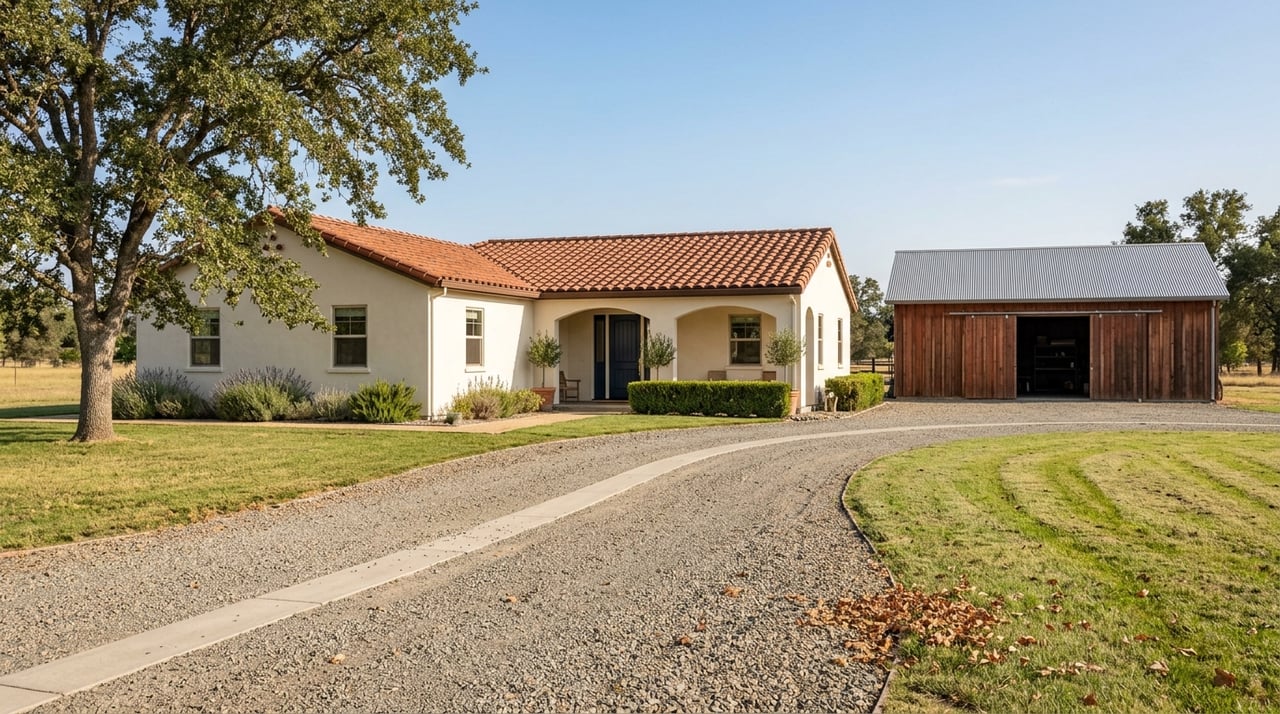
Barns, shops, greenhouses, fences, storage areas, and other rural improvements can add value, but only if buyers understand what they are getting. UC ANR notes that structures, equipment, fencing, storage, and transport-related assets matter because they affect whether a property can operate right away or needs added investment.
That is why documentation is so important. A buyer may see a barn or outbuilding and immediately want to know when it was built, whether permits were issued, and how it has been used.
Permit cleanup can protect your sale
Before listing, it is smart to confirm what is permitted and what is not. Solano County offers a pre-application consultation to help identify land-use issues, related permits, regulations, and estimated fees before a formal application is filed.
This can be especially useful if your property includes accessory structures or business-related improvements. The county’s business-license zoning-clearance process also shows how detailed site information may be required, including parcel boundaries, structures, easements, and distances to wells and septic systems.
Handling these questions early can reduce surprises during escrow. It also shows buyers that you have taken the property seriously.
Septic and well records support buyer confidence
Rural buyers often pay close attention to wastewater and drinking water information. Solano County Environmental Health oversees onsite sewage disposal permits and site evaluations, and county public health testing can include drinking water analysis for bacteria and nitrate or nitrite.
If you have septic records, well information, maintenance history, or water test results, keep them organized. These documents can help answer buyer questions quickly and support a smoother transaction.
Buyers may want a full property file
Farm and acreage buyers often expect more paperwork than a residential buyer. UC ANR lists documents lenders may request, including financial statements, tax statements, titles, insurance policies, equipment inventories, crop values, field maps, water-source details, soil maps, lease agreements, marketing plans, contracts, and production history.
You may not need every document for every sale, but the broader point is clear. A well-prepared seller makes it easier for buyers and lenders to understand the property, evaluate risk, and move forward.
A clean data room can strengthen your listing
One practical way to prepare is to build a simple property file before going live. Depending on your parcel, that might include:
- Parcel maps
- Zoning and land-use information
- Williamson Act contract status, if applicable
- Well and irrigation records
- Septic permits or evaluations
- Soil maps or crop history
- Lease agreements
- Improvement and permit records
- Production records or income-related documents
This level of organization can help your property stand out. It also supports more accurate pricing and more productive conversations with serious buyers.
Marketing should match the property type
Acreage and small farms around Dixon often need a more targeted approach than a residential-only listing strategy. UC ANR also emphasizes the importance of access to markets, including processor, retail, direct, cooperative, and broker channels.
In Solano County, the local crop mix includes tomatoes, almonds, nursery products, cattle and calves, and wine grapes. The county has also highlighted Dixon’s connection to tomato processing infrastructure, including Campbell’s facility, in its discussion of local agriculture and economic development.
That does not mean every buyer will be a commercial grower. It does mean buyers may view the property through an agricultural lens, so your listing should communicate the land’s practical strengths as clearly as the home’s lifestyle appeal.
Why specialized guidance helps
Selling a small farm or acreage parcel involves more moving parts than many traditional home sales. Pricing, buyer targeting, disclosures, records, and land-use questions all need careful handling.
That is where local experience matters. A team that understands Solano County’s rural market, agricultural property considerations, and full-service marketing can help you position the property properly from the start.
If you are considering a sale around Dixon, the Loney & Worley Team can help you evaluate the property, organize the right information, and create a marketing strategy that fits the land as well as the home.
FAQs
What makes selling acreage in Dixon different from selling a standard house?
- Acreage sales usually depend on land use, water, zoning, soils, permits, and income potential, not just the home’s size and appearance.
What should sellers verify about Williamson Act status in Solano County?
- Sellers should confirm whether the parcel is under an existing Williamson Act contract because contract terms can affect use restrictions, pricing, and buyer plans.
What water information do buyers want for small farms near Dixon?
- Buyers often want to review water source, cost, quality, availability, irrigation systems, and any well or pump records tied to the property.
What documents help when selling a small farm in Solano County?
- Useful documents may include parcel maps, permit history, septic and well records, lease agreements, soil maps, crop history, and any production or income-related records.
Why is permit review important before listing rural property around Dixon?
- Permit review can uncover issues with barns, shops, greenhouses, accessory dwellings, or other improvements before they delay negotiations or escrow.